


Making health-conscious decisions with your at-home menu doesn’t have to be complicated, but it does require commitment and a little more foresight at the grocery store. Simple adjustments to overall eating patterns, like building your plate around produce, powerful proteins and whole grains, can encourage better health.
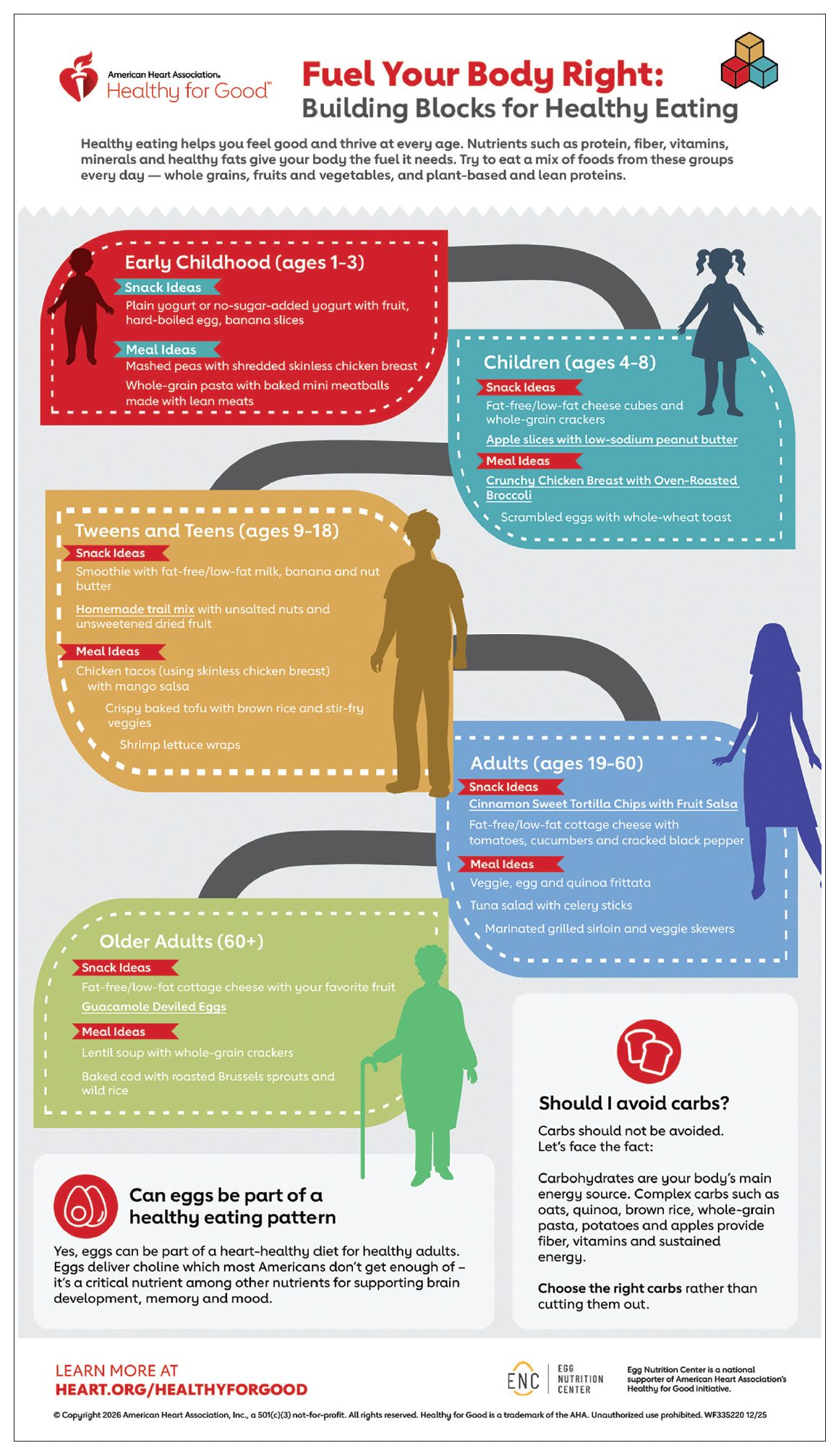
Nutritious meal planning can be easy, affordable and delicious — and it all starts with a little balance. Consider this advice from the American Heart Association’s Healthy for Good initiative, nationally sponsored by the Egg Nutrition Center, to adequately round out a healthy plate.
Fill Half Your Plate with Fruits and Veggies
Loaded with nutrients, fresh produce is a perfect place to start each plate. Fill about half your plate with combinations of bananas, strawberries, blueberries, sweet potatoes, peas, carrots and more of your favorites. To boost variety with each meal, look for fruit and veggie blends or step out of your usual routine and try something new.
Grocery tip: Frozen fruits and veggies are often cheaper and just as delicious as their fresh counterparts. They’re frozen right after being picked, locking in freshness for a longer shelf life. Just be sure to avoid products with added salt or sugar.
Carve Out a Quarter of the Plate for Powerful Proteins
Healthy food isn’t just fuel. It should nourish you, too. Look for versatile solutions that provide a protein power-up like skinless chicken breast, no-salt-added beans, low-sodium tuna, tofu or eggs.
High-quality protein from foods, along with a balanced diet and regular exercise, can help support the muscles in your body. Eggs are an example, along with lean animal protein and some plant-based proteins.
According to the American Heart Association’s guidelines, healthy people can include up to one whole egg daily, and up to seven per week, as part of a heart-healthy diet. For older adults with normal cholesterol, two eggs per day is acceptable.
Eggs deliver both protein and choline, nutrients that help support growing brains and bodies, especially early in life. In fact, many Americans don’t get enough choline, a critical nutrient for supporting brain development, memory and mood.
Grocery tip: Stock up on proteins that offer both versatility and affordability, helping you cook multiple meals per week without putting a dent in your wallet. Eggs are a perfect example, as they can be used at any meal — not just breakfast. Try them in wraps or omelets in the morning, hard-boil them to go with a lunchtime salad or add them to a frittata at dinner.
Save a Corner for Whole Grains
Finally, fill that last quarter of the plate with ready-to-go whole grains, many of which provide dietary fiber that can support a healthy heart and healthy digestion. Conversely, most refined grains contain little or no fiber.
Examples of whole grains include barley, brown rice, corn, oatmeal, rolled or steel-cut oats, popcorn, quinoa, sorghum and wild rice, along with products labeled “whole grain” or “whole wheat,” like bread or pasta.
Grocery tip: Look for whole grains that can make mealtime a cinch. Corn tortillas, instant oats and even popcorn can help you create nutritious plates and better-for-you snacks in no time. Try keeping packets of pre-cooked brown rice on hand to bulk up favorite dishes or toss with leftovers to round out a healthy plate.
Visit Heart.org to discover more nutrition guidance for heart-healthy meals.

